.png)


Beyond the Traditional Welcome: 5 Surprising Ways AI is Reimagining Cambodian Hospitality
Updated: Aug 5
by: Dyna Sao | 3 min reads

As Cambodia’s tourism landscape matures, local hoteliers in hubs like Siem Reap and Phnom Penh face a daunting strategic hurdle. How can a local boutique property compete with the massive technical infrastructure of global giants without sacrificing the very personal, human touch that makes them unique?
As a digital transformation strategist at b. Consulting Cambodia, we see this not as a threat, but as a massive opportunity for an ROI-driven evolution. AI adoption in the hospitality sector is currently expanding at an astonishing annual growth rate of 60%. For Cambodian business owners, AI is no longer a futuristic concept reserved for billion-dollar brands; it is an attainable tool designed to augment local talent and ensure the Kingdom remains a top-tier global destination.
The Polyglot Concierge and Robotic Support

For a boutique hotel hosting international travelers—ranging from Chinese tour groups to European solo explorers visiting Angkor Wat—the language barrier is a significant operational pain point. This is especially true during late-night hours when staffing is lean.
AI-powered chatbots and digital assistants have become the new frontline for 24/7 guest support. These tools handle routine inquiries—Wi-Fi passwords, pet policies, or temple dress
codes—instantly. Perhaps most surprising is the rise of physical AI: delivery and housekeeping robots are now handling repetitive tasks like towel drops or laundry runs, a trend already being pioneered by global players.
"These digital assistants never sleep, never take breaks, and can communicate in dozens of languages."
By offloading these repetitive "swivel-chair" tasks to digital and robotic assistants, your local staff is liberated to provide the high-value emotional labor that guests actually remember.
The Invisible Revenue Architect: Dynamic Pricing for Boutique Stays

Beyond room rates, capturing on-site F&B (Food and Beverage) spending is critical—especially when monsoon rains keep guests indoors. This is where modern, localized Point of Sale (POS) solutions like Monakum, MPOS, or CamboPOS come into play. Tailored specifically for the Cambodian hospitality market, these agile POS platforms streamline operations with multi-language interfaces (Khmer and English), dynamic QR ordering, and seamless dual-currency processing (KHR and USD).
When these POS systems are synced directly with a property's cloud PMS, the benefits compound. Hoteliers can track live dining and bar data, allowing them to instantly push targeted promotions or digital room-service specials based on real-time guest behavior. While the initial setup of this integrated tech stack requires strategy, most properties see a meaningful ROI within 12–18 months. By automating data flow from the front desk to the restaurant floor, hotels ensure lean operations and financial stability—even when the rains arrive.
The Green Revolution: AI as a Sustainability Partner

Electricity remains one of the highest overhead costs for hospitality businesses in Cambodia. AI is now a critical partner in "Green Tourism" initiatives through Smart Energy Management Systems.
By pairing IoT (Internet of Things) sensors with AI algorithms, hotels can do more than just turn off lights in empty rooms. These systems provide maintenance staff with visibility for preventative repair, alerting them to an inefficient air conditioning unit before it breaks or causes a spike in the utility bill.
"AI can help hotel properties save on energy, cut down on water consumption and reduce their carbon footprint."
This isn't just about saving the planet; it’s about protecting your bottom line by reducing the high operational costs associated with Cambodian utilities.
Scaling the "Personal" through Smart Technology
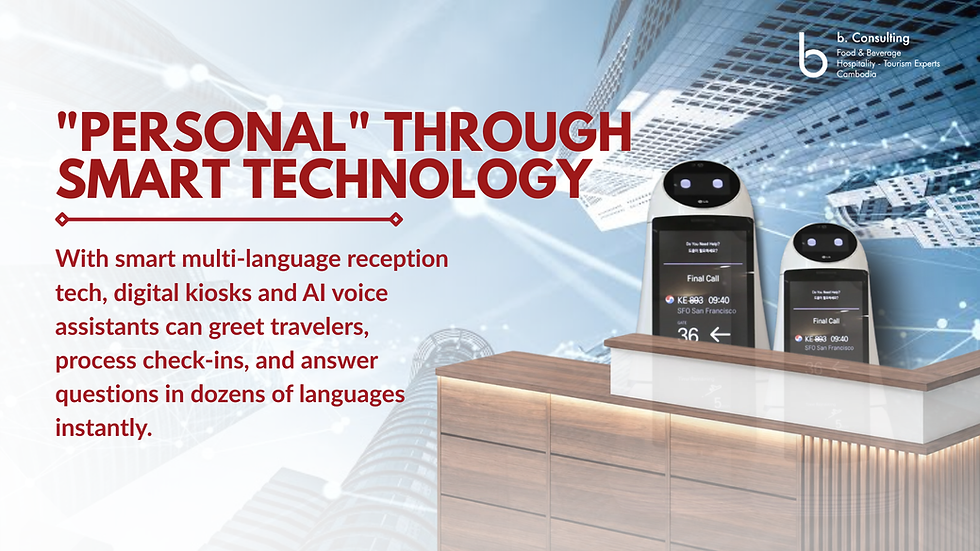
It is a common misconception that technology removes the human touch. In hospitality, AI is actually the key to offering a warm, personalized welcome to international guests, regardless of your team's native language.
With smart multi-language reception tech, digital kiosks and AI voice assistants can greet travelers, process check-ins, and answer questions in dozens of languages instantly. Before a guest even reaches the desk, AI-driven profiles can automatically route their messages to a staff member who speaks their language, or instantly translate the communication for the local team. By removing the stress and clutter of language barriers, you empower your staff to focus on genuine hospitality. AI handles the translation; your staff handles the connection.
The Practical Road Ahead: Starting Small
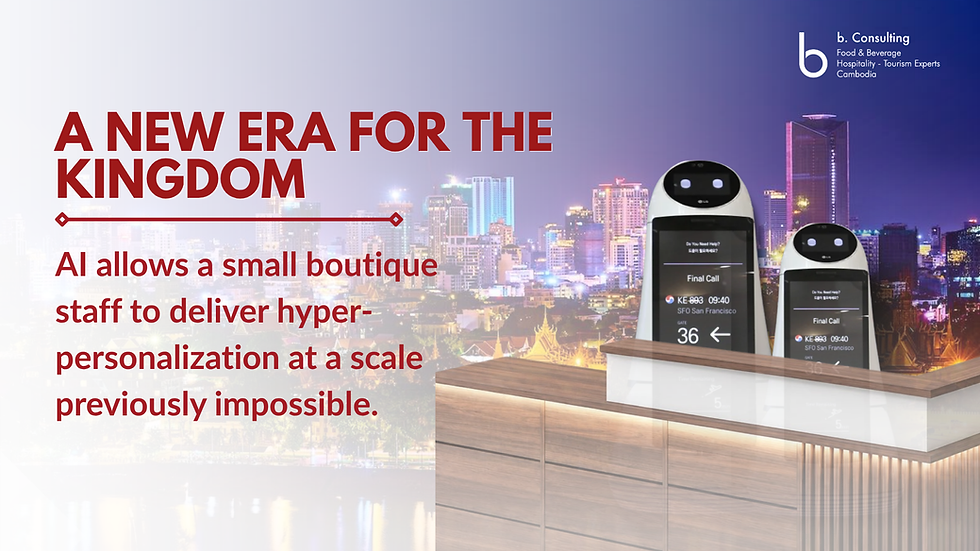
Transitioning to an AI-enhanced model does not require a total digital overhaul. However, it does require navigating challenges like legacy systems that may not easily integrate with new tools.
At b. Consulting Cambodia, we work with hoteliers to implement a phased, practical strategic roadmap:
Identify the Gap: Start with a specific service bottleneck, such as after-hours inquiries or inconsistent pricing.
Adopt Cloud-Based Models: Use subscription-based AI tools to avoid high upfront hardware costs.
Monitor and Iterate: Use AI to analyze guest feedback and monitor sentiment to ensure the technology is actually improving the guest experience.
The shift from traditional to tech-enhanced hospitality is not about replacing the human element; it is about empowering it. We are entering an era where the most successful Cambodian businesses will be those that use technology as a bridge to a more seamless guest journey.
In an era when technology can anticipate every need, will your business use AI to automate tasks, or to free your team to deliver the most legendary Cambodian hospitality yet? Let b. Consulting Cambodia help you navigate this transition and build a future-proof operational strategy.


Comments